
Fabric banners and vinyl banners are two of the most widely used materials in modern advertising and signage. Businesses, event organizers, and retail brands often compare these materials when choosing the right banner solution. This article explains the differences between sublimation banner fabric and vinyl banner fabric, their advantages, applications, and how to choose the best option for your advertising needs.
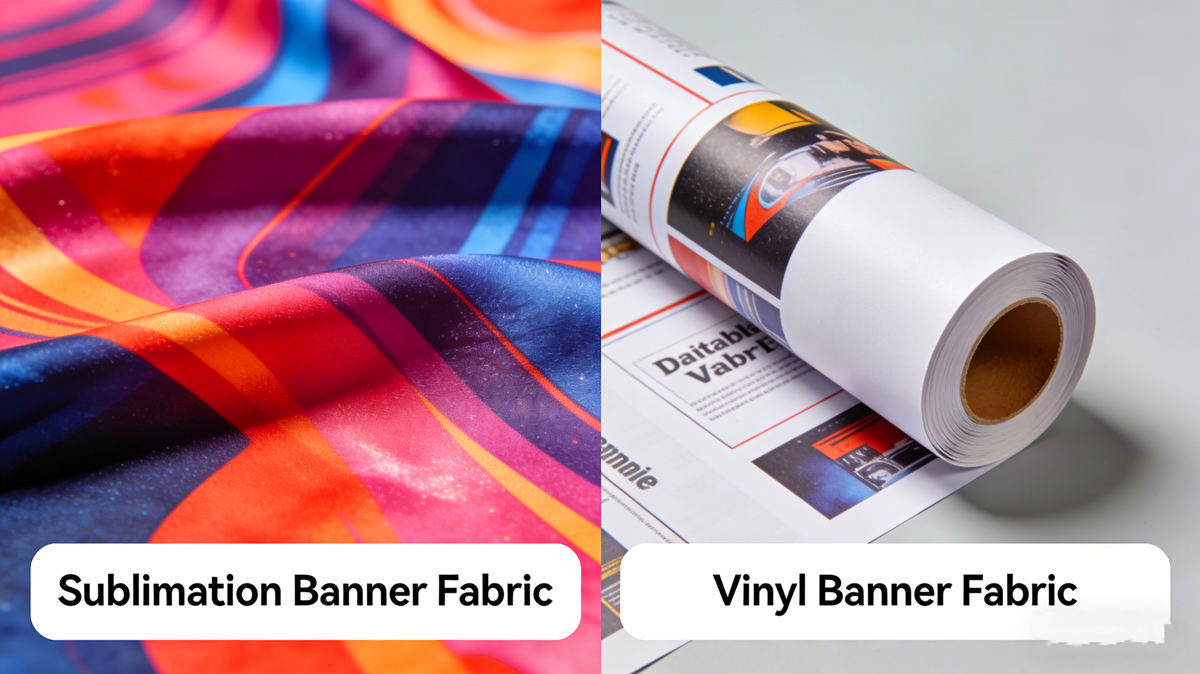
Sublimation banner fabric is a polyester-based textile designed for dye sublimation printing. During the printing process, heat transfers dye into the fabric fibers, producing vivid and durable images.
Fabric banners are known for their soft texture, premium appearance, and suitability for indoor displays. They are widely used for trade shows, retail stores, exhibitions, and event backdrops.
Vinyl banner fabric, also called PVC banner material, is a synthetic plastic-based material coated with PVC. It is reinforced with a polyester scrim layer to provide strength and tear resistance.
Vinyl banners are commonly used for outdoor signage because they are waterproof, weather-resistant, and durable in harsh environments.
Sublimation banner fabric uses dye sublimation printing, where heat and pressure transfer ink directly into polyester fibers. This method produces vibrant colors and detailed images that do not crack or peel.
Vinyl banners are printed using solvent, UV, or latex inks. These inks sit on the surface of the material, forming a protective layer that resists moisture and UV exposure.
Fabric banners offer high quality image reproduction with smooth gradients and soft textures. They are often preferred for premium branding and indoor environments.
Vinyl banners provide strong color saturation but have a glossy surface and less refined texture compared to fabric banners.
Fabric banners printed with dye sublimation are machine washable, making them suitable for repeated use at events and exhibitions.
Vinyl banners are resistant to rain, wind, and UV exposure. They are not washable but can be cleaned with a damp cloth.
Both fabric and vinyl banners can be customized with various finishing options, including:
Fabric banners are often chosen for trade show systems that require easy installation and lightweight materials.
Fabric banners typically have a higher initial material and printing cost due to textile manufacturing and dye sublimation processes. However, they are lightweight and reduce shipping costs.
Vinyl banners are generally more cost-effective for large outdoor advertising projects and offer long-term outdoor durability.
Fabric banners made from polyester textiles are more recyclable than PVC materials. Vinyl banners are durable but more difficult to recycle and may have a higher environmental impact.
Choose sublimation banner fabric if:
Choose vinyl banner fabric if:
Sublimation banner fabric offers better visual quality and texture, while vinyl banner fabric provides better outdoor durability.
Fabric banners can be used outdoors with special coatings, but vinyl banners are generally preferred for long-term outdoor advertising.
Yes, fabric banners printed with dye sublimation printing are machine washable and maintain their color after repeated washing.
Common finishing options include pole pockets, grommets, hemmed edges, and Velcro strips for mounting systems.
Vinyl banners are usually more cost-effective for outdoor advertising, while fabric banners provide premium indoor display quality.
Sublimation banner fabric and vinyl banner fabric each have unique advantages for advertising. Fabric banners deliver high quality visuals, lightweight handling, and premium presentation, while vinyl banners offer strong weather resistance and durability for outdoor use. Choosing the right banner material depends on the application, budget, and performance requirements.