

Teardrop flags are widely used for outdoor advertising, retail promotions, trade shows, sporting events, exhibitions, and brand displays. Their distinctive curved shape provides a recognizable advertising surface, while the lightweight fabric construction makes them convenient to transport, assemble, and display in different locations.
The quality of a teardrop flag depends on the fabric, printing method, sewing construction, and supporting hardware. Polyester fabric is a popular choice because it works well with digital dye sublimation printing and supports vibrant, detailed graphics. When the fabric is specifically designed for flag production, it can also provide the flexibility and dimensional stability needed to fit a curved flag pole.
H&S Sublimation provides polyester flag fabric solutions for digital printing and advertising display applications. Whether manufacturers are producing standard polyester flags or custom teardrop flags, selecting the appropriate fabric and compatible accessories helps achieve a consistent appearance and practical performance across different display environments.
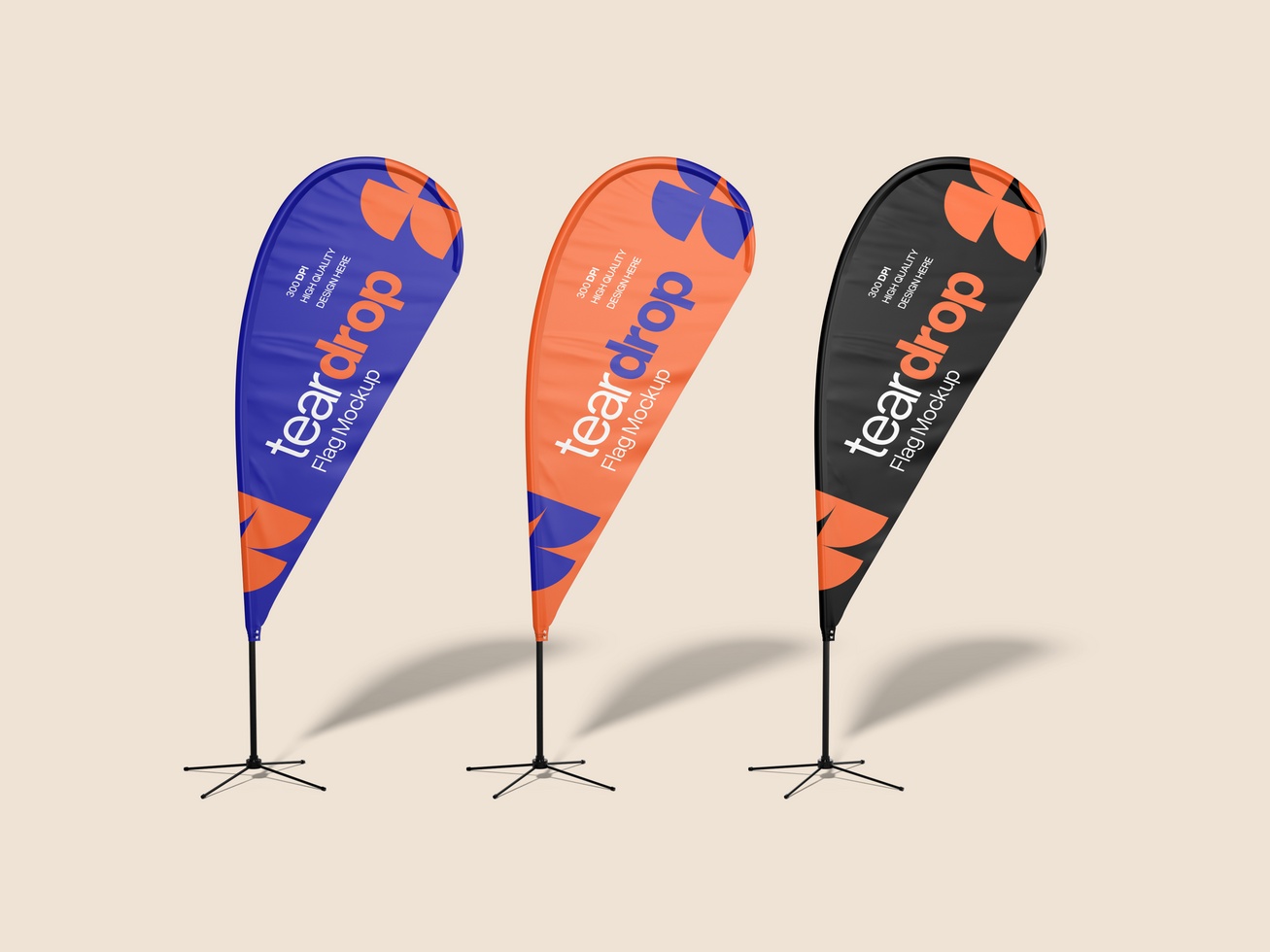
Teardrop flag fabric is a lightweight textile material used to manufacture teardrop-shaped advertising flags. It is generally made from polyester and designed to accommodate digital printing, particularly full color dye sublimation printing.
A finished teardrop flag has a rounded upper section and a narrower lower section, creating a shape similar to a water droplet. The fabric is cut according to a specific pattern and sewn with a pole pocket along one side. This pocket holds the curved flag pole and keeps the printed fabric in its intended shape.
Most teardrop flags use single sided printing, allowing the design to appear on the front while the image may be visible in reverse from the back, depending on the fabric construction and printing method.
The complete display system typically consists of:
The fabric, pole set, and base should be selected together to ensure that the finished flag fits properly and suits its intended installation environment.
Polyester fabric is widely used for advertising flags because it combines print compatibility, lightweight construction, flexibility, and practical durability. These properties make it suitable for producing promotional flags in different sizes and shapes.
Teardrop flags often contain brand logos, product images, promotional messages, and colorful graphics. Full color dye sublimation printing allows manufacturers to reproduce these designs with vivid colors and detailed image quality.
During sublimation printing, heat converts the dye into a gas, allowing it to penetrate the polyester fibers. After the transfer process, the color becomes part of the printed textile rather than forming a thick ink layer on its surface.
This printing method offers several benefits:
For manufacturers producing promotional polyester flags, using fabric specifically designed for sublimation helps achieve more consistent printing results.
A teardrop flag is designed to move naturally with the airflow around it. Lightweight polyester fabric allows the flag to respond to light wind while maintaining its curved profile around the supporting pole.
Fabric weight should be selected according to the flag dimensions, construction, and intended application. A material that is too heavy may affect the movement of smaller flags, while an unsuitable lightweight fabric may not provide the required stability for larger designs.
The goal is to balance flexibility, print quality, and mechanical performance.
Unlike flat rectangular banners, teardrop flags require fabric that follows a curved pole structure. The fabric must be flexible enough to form the intended shape without excessive tension or unwanted wrinkles.
A suitable polyester construction, together with accurate cutting and sewing, helps the finished flag fit the pole system correctly.
Polyester flags are used in both indoor and outdoor promotional displays. Their lightweight structure makes them convenient for temporary events, retail promotions, and portable advertising systems.
For outdoor use, the actual performance depends on fabric construction, dye and printing quality, UV exposure, moisture, wind speed, and maintenance. Outdoor-grade specifications should be selected according to the expected weather conditions rather than assuming that every polyester fabric is suitable for prolonged exposure to harsh conditions.
Polyester fabric flags can generally be folded or rolled for transportation. When the flag is completely dry and properly stored, it can be packed into an optional carrying bag for transport between events.
Careful folding and storage also help reduce unnecessary creasing and damage during handling.
Digital dye sublimation printing is a widely used process for creating full-color designs on polyester flag fabric. It is particularly suitable for teardrop flags featuring logos, photographs, gradients, and detailed advertising graphics.
The production process generally includes the following steps.
The design is prepared according to the finished teardrop flag dimensions and cutting pattern. The artwork should account for the curved shape, pole pocket position, seam allowance, and printable area.
Customers may provide their own artwork or use a free design service if the supplier offers one. Before production, the final design should be checked to ensure that important text, logos, and visual elements are positioned correctly.
The artwork is printed onto sublimation transfer paper using specialized sublimation inks. High-quality printing equipment and suitable color settings help reproduce the original design accurately.
The printed transfer paper is placed against the polyester fabric and processed under controlled temperature, pressure, and time conditions.
The heat allows the sublimation dye to penetrate the polyester fibers, producing a colorful print while retaining the textile's original flexibility.
After printing, the fabric is cut into the required teardrop shape. The edges are finished, and a pole pocket is sewn along the designated side.
Accurate cutting and sewing help the flag fit its curved pole and maintain the intended shape during display.
The finished flag should be inspected for:
A consistent production process helps manufacturers maintain quality across different custom flag orders.
Single sided printing is commonly used for teardrop flags because it provides a cost-effective way to display full-color promotional graphics.
With this printing configuration, the design is printed on one side of the polyester fabric. Depending on the fabric's openness, weight, and construction, some of the image may show through to the reverse side.
The reverse image is generally mirrored rather than independently printed. This means text and logos may appear reversed when viewed from behind.
For many advertising applications, this arrangement is acceptable because the main viewing direction is from the front.
When selecting fabric for single-sided printing, manufacturers should consider:
If a project requires independently readable graphics on both sides, a suitable double-sided construction or blockout fabric should be considered instead of assuming that ordinary single-sided printing will provide the same result.
The pole set determines how the printed fabric is supported and displayed. Different teardrop flag sizes may require different pole lengths, sectional designs, and base configurations.
A compatible pole set should match the flag's finished dimensions and the manufacturer's recommended assembly specifications.
Teardrop flag poles are commonly designed with multiple connected sections or flexible components. The assembled pole follows the curved shape of the flag and supports the fabric through its pole pocket.
When selecting a pole set, check:
The pole should provide the intended curved profile without putting excessive tension on the fabric or pole pocket.
The pole pocket is the fabric sleeve through which the flag pole passes. Its width and construction must match the pole diameter and assembly design.
A pole pocket that is too narrow may make installation difficult. One that is too loose may allow excessive movement and affect the flag's appearance.
For custom production, manufacturers should confirm pole dimensions and sewing requirements before cutting the fabric.
The base provides support for the flag pole and affects how the display system can be installed. Cross bases and square bases are common options for indoor and outdoor advertising applications.
The appropriate choice depends on the installation surface, flag dimensions, wind exposure, and whether additional weight is required.
A cross base usually consists of several metal arms extending from a central pole holder. Its foldable structure makes it convenient for transportation and storage.
Cross bases are commonly used for:
A compatible water bag can be added to some cross base systems to increase weight and improve stability.
A square base provides a broader, compact support structure. Depending on its design and material, it may be used for indoor displays or outdoor promotional setups.
Square bases can be selected when users prefer a stable, low-profile base or need a particular appearance for their display arrangement.
The actual stability depends on the base dimensions, construction, added weight, flag size, and installation conditions.
A water bag is an optional accessory used with compatible bases. Once filled, it adds weight to the base and helps reduce movement during normal display use.
Before selecting a water bag, confirm that its dimensions and attachment method match the base design.
Neither a cross base nor a square base with a water bag should be assumed to make a teardrop flag safe in high wind. Flags should be taken down when wind conditions exceed the recommended operating limits.
Outdoor teardrop flags are exposed to changing weather conditions. Light wind, strong gusts, rain, sunlight, and prolonged outdoor exposure can all influence the performance of the fabric and supporting hardware.
Choosing the right polyester fabric is only one part of preparing a flag for outdoor use. The pole set, base, installation surface, and local weather conditions also need to be considered.
In light wind, a properly assembled teardrop flag can move naturally and display its graphics. Lightweight polyester fabric allows the flag to respond to airflow without requiring a heavy support structure.
This is one reason teardrop flags are commonly used outside retail stores, cafes, exhibitions, and event venues.
As wind speed increases, greater force is applied to the fabric, pole, and base. The flag may move more frequently, and the supporting hardware must handle the additional load.
For these conditions, manufacturers and users should follow the pole system's wind recommendations and select an appropriate base for the installation surface.
High wind can cause excessive fabric movement, pole deformation, base displacement, and damage to seams or pole pockets. Heavy rain and severe weather may also affect the condition of the complete display system.
Teardrop flags should not be treated as permanent structures for high-wind environments. During strong gusts, storms, or other harsh conditions, the safest approach is to remove the flag and store it until conditions improve.
The expected performance of a flag should always be evaluated using the complete system rather than the fabric alone.
Different advertising projects require different flag dimensions, fabric specifications, and printing arrangements. Custom production allows manufacturers and promotional product suppliers to match the finished flag to a particular display requirement.
Common customization options include:
Before placing an order, confirm the finished dimensions, artwork, fabric specification, pole pocket measurements, and accessory requirements. This helps avoid compatibility problems during final assembly.
Teardrop flags are often used at different events and promotional locations. Portable accessories make transportation, installation, and storage more convenient.
An optional carrying bag can be supplied for compatible flag systems. It helps keep the fabric, pole sections, and selected accessories together during transportation.
When ordering a carrying bag, check its dimensions and internal compartments to ensure that it can accommodate the complete pole set and folded fabric.
The pole set supports the fabric and creates the curved teardrop shape. It should be selected according to the flag dimensions and pole pocket construction.
The base provides the support required for installation on compatible surfaces. The choice depends on the display location and the desired installation arrangement.
A water bag can add weight to a compatible base. It is useful when additional ballast is needed, but it does not replace proper installation or safe wind management.
For suitable outdoor ground surfaces, a compatible ground spike can secure the pole directly into the soil. This option is often preferred for grass areas, gardens, and outdoor event locations where the ground allows proper insertion.
For fabric manufacturers, printing companies, and advertising display suppliers, material selection should consider both printing performance and finished product requirements.
Confirm the polyester content and whether the material is suitable for the intended digital printing process. Fabric specifically designed for dye sublimation can help achieve more predictable color reproduction.
Fabric weight affects flexibility, handling, and the way the flag responds to wind. The construction should also provide a consistent surface for printing and suitable strength for cutting and sewing.
A sample print can help evaluate color saturation, image detail, and overall appearance. This is particularly useful for orders containing corporate colors, detailed logos, or photographic graphics.
The fabric should support the required cutting and sewing process. Pole pocket dimensions must match the selected pole set to ensure proper assembly.
For outdoor displays, evaluate the fabric's UV exposure tolerance, color retention, moisture behavior, and mechanical strength. The expected service conditions should be discussed with the supplier before selecting a specification.
A fabric sample or finished flag prototype allows buyers to inspect the material, print quality, flexibility, and sewing details before approving a larger order.
H&S Sublimation focuses on polyester textiles and fabric solutions for digital printing and advertising display applications.
Its flag fabric product range includes materials designed for different flag and banner requirements. For example, the HS-01 flag fabric product specification lists a fabric weight of 70 g/m², a width range of 0.7–3.2 m, and compatibility with direct sublimation and heat transfer printing.
For teardrop flag production, selecting a suitable fabric specification helps manufacturers match print requirements with the finished flag structure.
When discussing a custom project with H&S Sublimation, buyers can confirm:
By confirming these details before production, manufacturers can select a material that matches their printing equipment, flag design, and target application.
Teardrop flags are commonly made from lightweight polyester fabric. Polyester is suitable for digital dye sublimation printing and offers the flexibility needed to fit a curved flag pole. The specific fabric construction and weight should be selected according to the flag size and intended use.
Yes. Polyester fabric is widely used for digital dye sublimation printing because sublimation dyes can penetrate polyester fibers under controlled heat. This allows manufacturers to produce detailed graphics and vibrant colors on fabric flags.
Full color dye sublimation printing is a digital textile printing process that uses heat to transfer sublimation dyes into polyester fibers. It is commonly used for flags and advertising textiles because it supports detailed images, gradients, logos, and colorful promotional designs.
Most standard teardrop flags use single sided printing. The printed image may show through to the reverse side as a mirrored image, depending on the fabric construction. Projects requiring independent graphics on both sides may need a special double-sided or blockout fabric structure.
A pole pocket is a sewn fabric sleeve along one side of the flag. The curved flag pole passes through this sleeve to support the fabric and maintain the teardrop shape. Its dimensions should match the pole system.
A cross base is commonly chosen for portable displays on flat surfaces because many designs are foldable and easy to transport. A square base offers a broader, compact support structure. The better choice depends on the flag dimensions, installation surface, wind exposure, and base design.
Yes, a water bag can be used with compatible base systems to add weight and improve stability during normal display conditions. Check the base design and water bag attachment method before use. It should not be treated as protection against high wind or severe weather.
Teardrop flags are designed for promotional display rather than unrestricted high-wind use. Strong gusts can place considerable stress on the fabric, pole, seams, and base. Follow the manufacturer's wind recommendations and remove the flag during high wind or harsh weather conditions.
Yes. Lightweight polyester fabric allows teardrop flags to move naturally in light wind. The movement can make the advertising display more noticeable while maintaining the curved flag shape when the pole system is properly assembled.
Yes. Polyester flags can be produced in different sizes according to the fabric width, printing equipment, cutting pattern, and pole system. Custom dimensions should be confirmed before production to ensure that the fabric and pole set are compatible.
A carry bag may be supplied as an optional accessory, depending on the product package and supplier. Buyers should confirm whether the bag is included and whether it is large enough to hold the fabric, pole set, and selected accessories.
Some suppliers or printing companies offer free design assistance, while others require customers to submit print-ready artwork. Confirm the availability of a free design service before ordering. Artwork should follow the required flag dimensions and pole pocket layout.
Common accessories include a pole set, cross base, square base, water bag, ground spike, and optional carrying bag. The appropriate combination depends on the installation surface, flag size, and display environment.
Allow the fabric to dry completely before folding or rolling it for storage. Keep it in a clean, dry carrying bag or storage area, away from sharp objects and excessive heat. Proper storage helps reduce creasing and unnecessary fabric damage.
Teardrop flag fabric needs to combine printing compatibility, flexibility, dimensional stability, and suitable strength for its intended display application. Polyester fabric designed for digital dye sublimation printing provides an effective material choice for producing colorful advertising flags with detailed graphics.
When selecting fabric for teardrop flags, manufacturers should also consider single-sided printing requirements, pole pocket dimensions, flag pole compatibility, and the choice of cross base, square base, or other accessories. Weather conditions should be evaluated as part of the complete display system, particularly when flags are installed outdoors.
H&S Sublimation provides polyester flag fabric solutions for digital printing applications. By matching the fabric specification with the flag design and production requirements, manufacturers can develop teardrop flags for retail promotions, exhibitions, outdoor advertising, and other display projects.