
Digital printing on fabric has transformed the signage, advertising, and textile industries. From indoor displays to outdoor banners and custom apparel, printable fabrics offer flexibility, speed, and high-quality results for modern printing applications.
This guide explains the main printable fabric types, how they work with an inkjet printer, and how to choose the right material for banners, signage, and textiles.
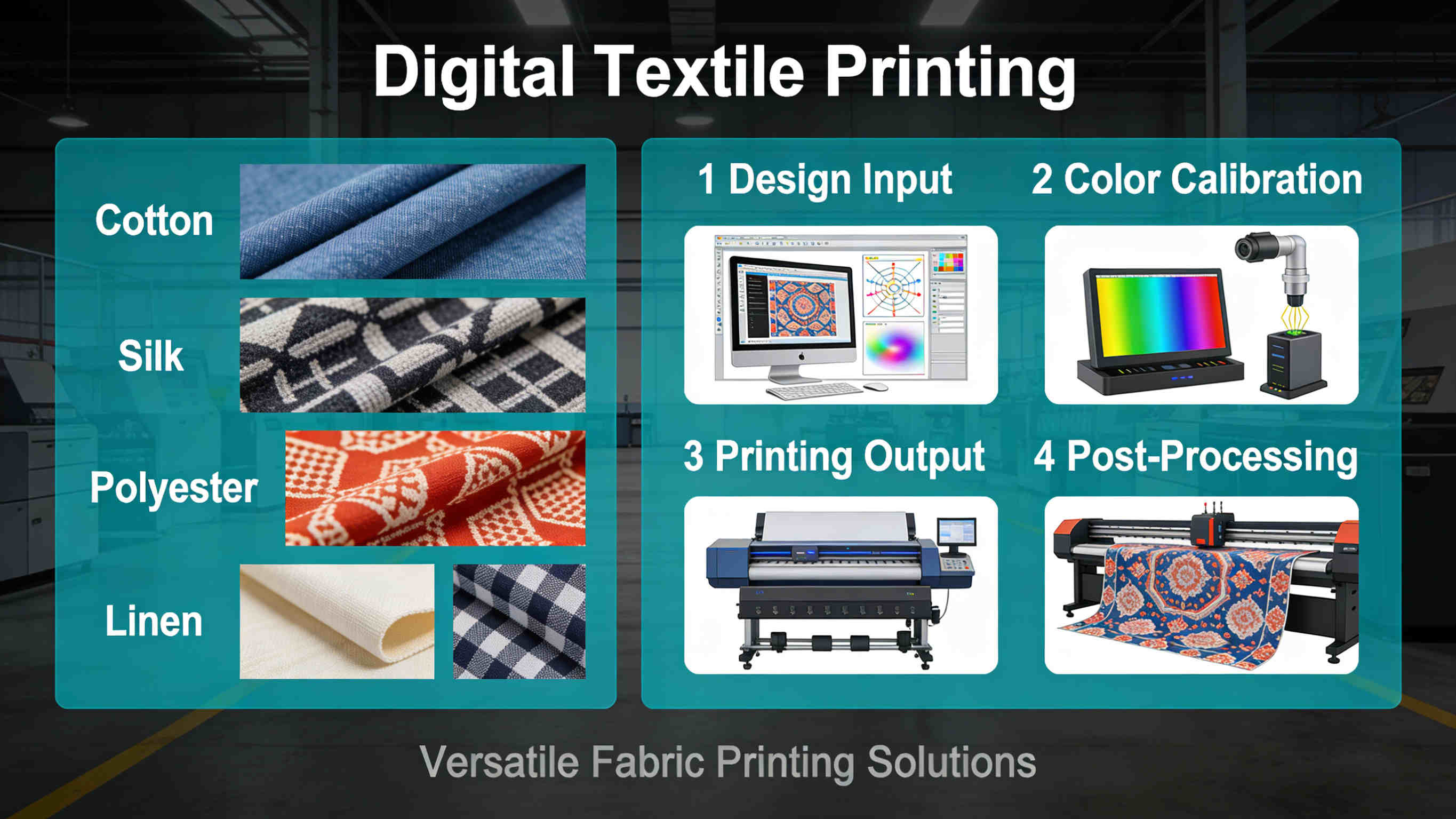
Printable fabric refers to textile materials designed to receive digital ink using modern printing technologies such as inkjet printing, dye sublimation, or UV printing. These fabrics are engineered to deliver consistent ink absorption, color reproduction, and durability.
Unlike traditional textile printing, digital printing allows direct printing from digital files without the need for screens or plates, making it ideal for custom and short-run production.
Digital fabric printing uses an inkjet printer to apply ink droplets directly onto textile surfaces. Depending on the fabric type and ink system, the process may involve:
Different printing methods require specific fabric compositions and coatings to achieve high-quality results.
Polyester is the most widely used fabric for digital printing, especially for dye sublimation.
Key features:
Common applications:
Cotton is popular for apparel and home textiles.
Key features:
Applications:
Canvas is a heavy-duty woven fabric used for artistic and advertising prints.
Key features:
Applications:
Mesh fabrics are perforated textiles used for outdoor applications.
Key features:
Applications:
Blockout fabrics contain layers that prevent light transmission.
Key features:
Applications:
PVC-coated fabrics combine textile base materials with a vinyl coating.
Key features:
Applications:
Different fabrics require specific inks, such as:
Large-format and industrial inkjet printer systems vary in ink technology, resolution, and media handling. Fabric selection should match printer capabilities.
Outdoor applications require UV resistance and weatherproof materials, while indoor displays prioritize texture and visual quality.
Printable fabrics can be finished with:
Polyester fabric and PVC-coated fabric are commonly used for banners. Polyester is preferred for soft signage, while PVC is used for heavy-duty outdoor banners.
Not all fabrics are suitable. Printable fabrics are often coated or specially treated to ensure proper ink absorption and color stability.
Sublimation fabric is specifically designed for dye sublimation printing, usually polyester. Printable fabric is a broader category that includes materials compatible with various ink systems.
Yes, cotton can be printed using pigment or reactive inks, but it is not suitable for dye sublimation printing.
Blockout fabric is used for displays where light transmission must be blocked, such as roll-up banners and double-sided displays.
Printable fabrics for digital printing include polyester, cotton, canvas, mesh, blockout, and PVC-coated textiles. Each material offers different performance characteristics depending on the printing method, application environment, and finishing requirements.
Understanding fabric composition, ink compatibility, and end-use applications helps buyers select the right material for banners, signage, and textile production.