

Rectangle flags are widely used for outdoor advertising, event promotion, retail displays, exhibitions, and brand identification. Their simple shape provides a large, clearly defined printing area, making them suitable for displaying logos, promotional messages, product images, and full-color graphics.
Choosing the right rectangle flag fabric for sublimation printing helps achieve clear graphic details, vibrant colors, and consistent print quality. Polyester flag fabrics are commonly selected for dye sublimation printing because they support heat-based ink transfer and are available in different constructions, weights, and widths to meet various flag production requirements.
H&S Sublimation supplies polyester fabrics for flag printing applications, helping manufacturers and printing businesses select suitable materials for custom rectangle flags, single sided flags, and double sided flags.
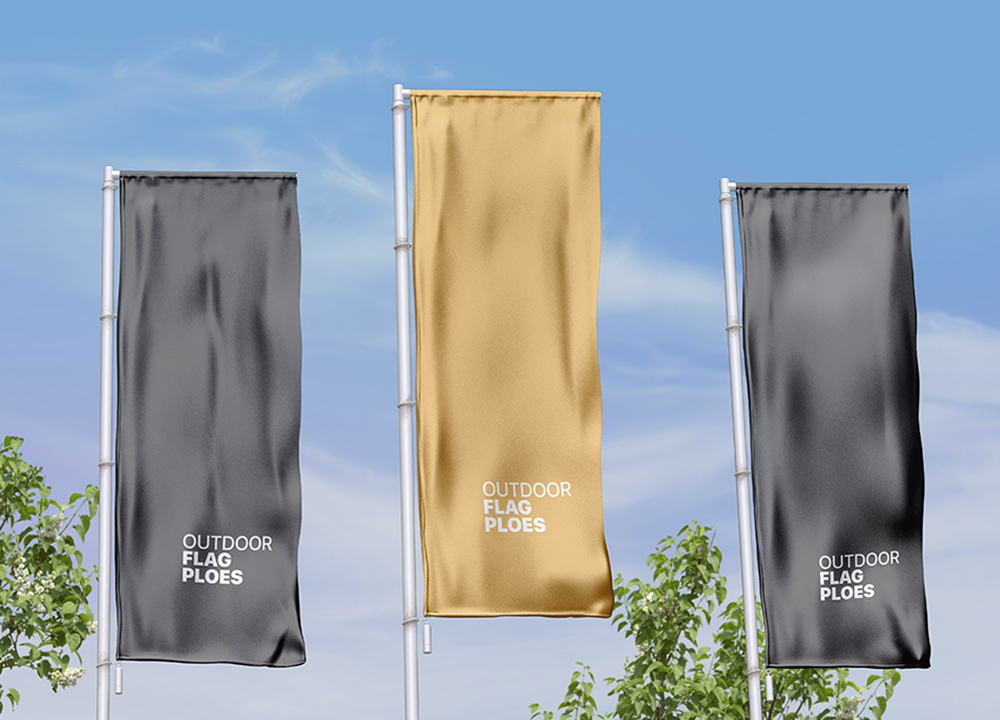
Rectangle flag fabric for sublimation printing is a textile material designed for producing rectangular advertising and display flags using dye sublimation printing. Polyester is commonly used because sublimation dyes can transfer into polyester fibers under controlled heat and pressure, creating printed graphics with good color integration.
The fabric is cut and sewn into a rectangular flag shape, with pole pockets or other attachment features added according to the flag stand or mounting system. Depending on the printing method and finished construction, rectangle flags can be produced with single-sided or double-sided designs.
Common applications include outdoor promotional flags, storefront advertising, trade show displays, sports events, festivals, retail promotions, and corporate branding.
Polyester is widely used in sublimation flag production because of its compatibility with heat-transfer printing and its practical textile properties.
Dye sublimation printing uses heat to transfer sublimation ink into polyester fibers. When the correct fabric, ink, temperature, pressure, and processing time are used, the printed design becomes integrated into the material rather than forming a thick surface layer.
This process supports detailed graphics, smooth color transitions, and vibrant colors for promotional printed flags.
Rectangle flags are frequently used on outdoor flagpoles and portable display systems. Lightweight polyester fabric allows the flag to move with the wind and can make handling, folding, transportation, and storage more convenient.
The appropriate fabric weight depends on the intended application, printing method, flag dimensions, and expected usage conditions.
Rectangle flags are produced in various dimensions, from compact promotional displays to large outdoor advertising flags. Selecting a fabric with a suitable width can help reduce unnecessary material waste and simplify cutting and sewing during production.
Polyester flag fabrics can be processed into different shapes and sizes. Manufacturers can add pole pockets, reinforced edges, stitching, and other finishing details to match different flag stands and installation requirements.
Dye sublimation printing is a heat-based process commonly used to transfer full-color designs onto polyester textiles. The production process generally includes the following stages.
The artwork is prepared according to the finished rectangle flag dimensions. Logos, text, photographs, and promotional graphics should be arranged within the printable area, with suitable allowances for cutting, hemming, and sewing.
For double-sided flags, the artwork and fabric construction should be planned according to the required front and back appearance.
The design is printed onto sublimation transfer paper using compatible sublimation inks. Printing settings should be adjusted according to the printer, ink system, paper, and fabric specifications.
The printed transfer paper is placed against the polyester fabric and processed using a heat press or calendar heat-transfer machine. Under controlled conditions, the sublimation ink transfers into the polyester fibers.
The correct temperature, pressure, and processing time help achieve consistent color reproduction and reduce printing defects.
After printing, the fabric is cut according to the required rectangle flag dimensions. The edges are hemmed or reinforced to improve the finished construction.
Pole pockets can be sewn along one edge or other specified positions to accommodate the selected flagpole system.
Finished flags should be checked for print alignment, color consistency, sewing quality, edge finishing, and pole pocket dimensions before packaging.
Rectangle flags can be manufactured with different printing and fabric constructions. The most suitable option depends on the viewing direction, display location, budget, and desired visual effect.
Single sided flags are printed on one side of the fabric. Depending on the fabric construction and printing method, the design may be visible through the reverse side, usually with a mirrored appearance.
Common characteristics include:
Single-sided printing is a practical option when cost, weight, and straightforward production are priorities.
Double sided flags are designed to display graphics on both sides. A common construction uses two printed fabric layers with an opaque or light-blocking middle layer to reduce image show-through.
Depending on the manufacturing method, the two sides can display the same design or different graphics.
Common characteristics include:
Double sided flags are often selected for public spaces, shopping areas, exhibition environments, and other locations requiring two-sided visibility.
| Comparison | Single Sided Flags | Double Sided Flags |
|---|---|---|
| Printing | One printed side | Two printed sides or a double-layer construction |
| Reverse appearance | Often mirrored or visible through the fabric | Designed for independent front and back viewing |
| Fabric construction | Usually one fabric layer | Commonly two printed layers with a middle layer |
| Weight | Generally lighter | Generally heavier |
| Production | Relatively simple | Requires additional printing or assembly |
| Typical applications | One-direction viewing | Two-direction viewing |
The final choice should be based on the display environment and the required appearance from each viewing direction.
Pole pockets are sewn fabric sleeves that allow a flag to slide over or attach to a pole. They are commonly used for rectangle flags mounted on vertical flagpoles, display frames, and other advertising structures.
The dimensions and construction of pole pockets should match the selected pole system.
Pole diameter: The pocket opening should provide sufficient clearance for the intended pole.
Pocket width: The finished sleeve should accommodate the pole without excessive looseness or difficulty during installation.
Sewing quality: Consistent stitching helps maintain the pocket structure during repeated installation and removal.
Fabric strength: The fabric and sewing construction should be suitable for the flag dimensions and expected display conditions.
For custom flag production, manufacturers should confirm pole diameter, pocket dimensions, flag size, and installation direction before cutting and sewing.
Rectangle flags can be installed using different support systems depending on the display location and ground surface.
A ground stake is designed to secure a compatible flagpole system in soil or other suitable ground surfaces. It is commonly used for outdoor promotions, roadside displays, sporting events, and temporary advertising installations.
The stake should match the flagpole system and be installed according to the manufacturer's instructions.
A water bag is a ballast accessory used with compatible flag bases to add weight and improve stability. It is often used on hard surfaces where a ground stake cannot be inserted.
The required ballast depends on the flag size, stand design, surface conditions, and wind exposure. A water bag does not make a flag system suitable for every weather condition.
Before ordering rectangle flags, manufacturers and buyers should confirm:
Matching the flag fabric, sewing construction, pole, and base helps create a complete display system.
Outdoor rectangle flags are exposed to changing weather conditions, including sunlight, wind, rain, and humidity. Fabric selection and finished construction should reflect the expected environment.
Wind creates repeated movement and tension across the flag surface. Larger flags generally experience greater wind loading, so the flag dimensions, fabric construction, stitching, pole system, and base stability should be considered together.
Flags should be removed or lowered when wind conditions exceed the limits recommended for the display system.
Polyester fabric is commonly used for outdoor flag applications, but its actual performance depends on the fabric construction, finishing treatment, sewing quality, and exposure conditions.
After exposure to rain, flags should be allowed to dry properly before long-term storage to reduce the risk of odor and moisture-related damage.
Extended exposure to sunlight can gradually affect printed colors and textile properties. The rate of fading depends on the sublimation inks, printing conditions, fabric, UV exposure, and total outdoor service time.
For long-term outdoor displays, buyers should evaluate the complete material and printing system rather than relying on fabric type alone.
Selecting high quality flag fabrics involves more than checking the material name. Printing performance, fabric construction, finishing, and final application should all be evaluated.
Polyester is commonly selected for dye sublimation flag printing. Buyers should confirm the fabric composition and compatibility with their printing equipment and ink system.
Fabric weight affects the appearance, drape, handling, and overall construction of a finished flag. Knitted and woven polyester fabrics may offer different surface characteristics and handling properties.
The suitable option depends on the flag size, printing method, intended display location, and production requirements.
Before mass production, test the fabric using the actual printer, sublimation ink, transfer paper, and heat-transfer settings. Check color reproduction, sharpness, and consistency after printing.
Choosing a suitable fabric width can help improve material utilization when producing different rectangle flag sizes. Manufacturers should consider the layout of multiple flag panels and the required sewing allowances.
A well-printed flag also needs suitable finishing. Inspect edge stitching, pole pockets, reinforced areas, and the consistency of finished dimensions.
For manufacturers handling repeat orders, stable fabric specifications and consistent quality between batches help maintain predictable printing and production results.
Rectangle flags are used in many advertising and promotional environments because their shape provides a straightforward layout for text, logos, and graphic designs.
Common applications include:
Outdoor advertising: Promotional messages, brand logos, and campaign graphics displayed outside retail stores, shopping centers, and commercial buildings.
Trade shows and exhibitions: Brand identification and directional information at exhibition venues and industry events.
Retail promotions: Seasonal sales, product launches, store openings, and promotional campaigns.
Sports events: Event identification, sponsor graphics, team branding, and venue decoration.
Festivals and public events: Decorative graphics, event information, and sponsor displays.
Corporate branding: Company logos, brand messages, and customized printed flags for commercial premises.
For these applications, manufacturers can select suitable polyester flag fabrics and customize the finished flag dimensions, printing method, pole pockets, and accessories.
H&S Sublimation focuses on sublimation textile materials for printing and advertising applications. Selecting the right fabric requires consideration of printing compatibility, fabric construction, production requirements, and the intended use of the finished product.
When sourcing rectangle flag fabric, buyers can discuss the following requirements with the supplier:
Providing detailed application and printing information helps the supplier recommend a suitable fabric option for the required flag production process.
Polyester is commonly used for rectangle flags produced with dye sublimation printing. It supports heat-based sublimation ink transfer and is available in different fabric constructions and weights for indoor and outdoor advertising applications.
Yes. Polyester flag fabric is suitable for dye sublimation printing when its composition and construction are compatible with the selected ink, transfer paper, and heat-transfer equipment.
Single sided flags are printed on one side, and the design may appear mirrored on the reverse. Double sided flags are constructed to display graphics on both sides, commonly using two printed fabric layers with a middle layer to reduce show-through.
Yes. Double sided flags can be manufactured with different designs on the front and back. The printing and assembly method should be specified before production to ensure the correct orientation and finished appearance.
Pole pockets are fabric sleeves sewn along a flag edge. They allow the flag to slide over or attach to a compatible flagpole. Pocket dimensions should be matched to the pole diameter and mounting system.
Measure the pole diameter and confirm the required clearance for installation. The pocket width, seam allowance, and finished opening should be agreed upon before cutting and sewing the flag.
Polyester rectangle flags are commonly used outdoors. Their actual service life depends on fabric construction, printing quality, sewing, sunlight exposure, wind, rain, and installation conditions.
A ground stake secures a compatible flag system in suitable soil or ground surfaces. A water bag adds ballast to a compatible base, making it useful on hard surfaces where a stake cannot be inserted.
Yes. Suitable hemming, reinforced edges, and correctly sewn pole pockets help create a finished flag that can be installed and handled as intended. The construction should match the flag size and mounting system.
Custom requirements depend on the supplier's available fabric specifications and production capabilities. Buyers should provide the intended flag dimensions, printing method, and application when requesting fabric options.
Use polyester fabric compatible with sublimation ink, prepare high-resolution artwork, and calibrate the printer and heat-transfer settings. Testing the complete printing process before bulk production helps improve color consistency.
Allow flags to dry completely before storage. Fold or roll them according to the fabric and printing requirements, and keep them in a clean, dry location away from excessive heat and prolonged direct sunlight.
Choosing suitable rectangle flag fabric for sublimation printing involves evaluating polyester composition, printing compatibility, fabric construction, and finished flag requirements. Whether producing single sided flags or double sided flags, manufacturers should also consider pole pockets, sewing details, flag dimensions, and compatible accessories such as a ground stake or water bag.
With the right combination of flag fabrics, dye sublimation printing, and finishing methods, printing businesses can produce custom printed flags with clear graphics and vibrant colors for retail advertising, exhibitions, outdoor promotions, and event displays.
Contact H&S Sublimation to discuss polyester fabric options for your rectangle flag printing requirements.