

If you are planning to use dye sublimation printing, choosing the right fabric is one of the most important decisions. Many people assume any fabric can be printed with sublimation, but that is not true.
The biggest difference is how the ink interacts with the fabric. Sublimation fabric allows the ink to become part of the fibers, while regular fabric often requires the ink to sit on the surface.
In this guide, you'll learn:
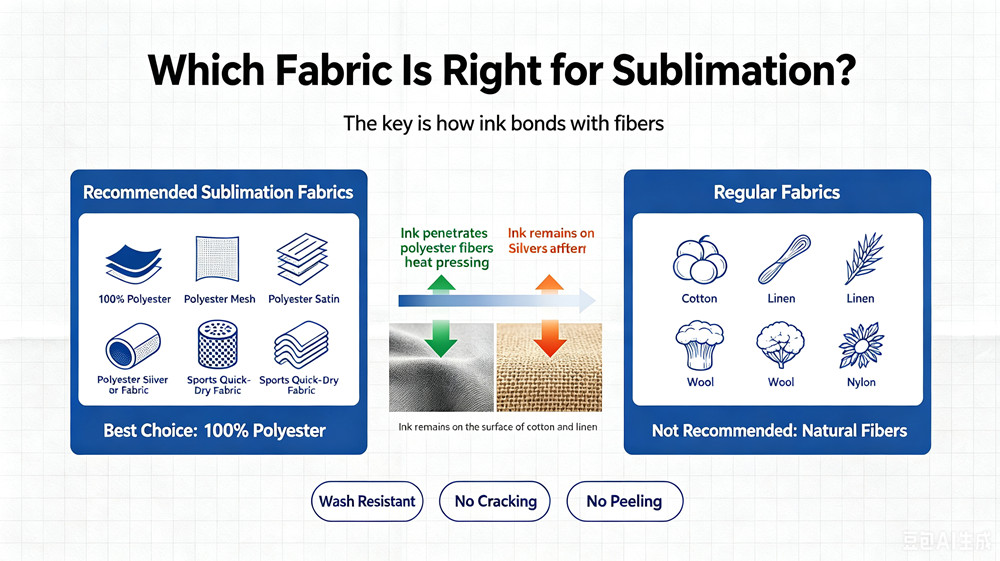
Sublimation fabric is usually 100% polyester or a high-polyester blend that allows sublimation ink to permanently bond with the fibers under heat and pressure.
Regular fabric includes materials such as cotton, linen, rayon, wool, or nylon that are designed for everyday textile use but are not always suitable for dye sublimation.
Because sublimation ink forms a permanent bond with polyester fibers, the print becomes part of the fabric instead of creating a coating on the surface.
Sublimation fabric is a textile specifically designed for dye sublimation printing.
During printing:
This process is called Sublimation ink bonding, and it creates images that do not crack, peel, or wash away.
Common sublimation fabrics include:
Regular fabric refers to textiles made for general clothing, home textiles, upholstery, or industrial applications.
Examples include:
Most of these materials are excellent for comfort and daily use, but they are not designed for sublimation printing.
Instead, they are commonly decorated with:
One of the most common questions is about Polyester vs cotton sublimation.
Here is a simple comparison.
| Feature | Polyester | Cotton |
|---|---|---|
| Sublimation compatibility | Excellent | Poor |
| Ink bonding | Permanent | Very limited |
| Color brightness | Very vibrant | Dull |
| Wash durability | Excellent | Low |
| Image sharpness | High | Moderate |
| Heat resistance | Excellent | Good |
Polyester contains synthetic polymer fibers that open slightly under heat.
During sublimation, the dye moves inside these fibers and becomes permanently locked in place.
This creates:
Cotton is a natural fiber.
Sublimation ink cannot chemically bond with cotton fibers, so the dye remains on the surface instead of entering the fabric.
The result is:
For this reason, cotton is generally not recommended for standard dye sublimation.
Professional print shops usually recommend 100% polyester blanks.
These fabrics provide the highest print quality because they contain enough polyester fibers for complete dye transfer.
Advantages include:
Products commonly made with 100% polyester blanks include:
Understanding Sublimation ink bonding explains why fabric selection matters.
Unlike screen printing or heat transfer vinyl, sublimation ink contains special dyes that change directly from solid to gas.
When heat reaches around 190–210°C (374–410°F):
Since the color is inside the fibers rather than sitting on top, the fabric keeps its soft feel.
One major benefit of sublimation is Permanent textile printing.
Because the image becomes part of the material, it does not:
With proper care, sublimated garments can keep their appearance through many wash cycles.
This makes sublimation popular for sportswear, uniforms, and promotional products that receive frequent use.
Many businesses choose sublimation because it delivers a Vibrant and durable print.
The colors remain bright because the dye is inside the polyester fibers rather than forming a layer on top.
Benefits include:
This makes sublimation suitable for:
Yes.
Many polyester performance textiles are designed as Breathable printing fabric.
Modern sports fabrics use moisture-wicking polyester that allows:
Because sublimation does not create a thick ink layer, the fabric maintains its breathability after printing.
This is one reason sublimation is widely used for athletic clothing.
Technically, standard sublimation is not suitable for cotton.
Since cotton lacks polyester polymers, sublimation ink cannot permanently bond with the fibers.
Some companies sell:
These products can improve results, but they usually do not match the brightness or durability of polyester.
If your goal is professional-quality sublimation, polyester remains the preferred option.
The best choice is Sublimation on light colored fabrics.
White fabric produces the brightest colors because sublimation ink is transparent.
Suitable colors include:
Dark fabrics are generally not recommended because sublimation inks cannot print white.
The fabric color will show through the printed image, changing the final appearance.
| Feature | Sublimation Fabric | Regular Fabric |
|---|---|---|
| Material | Polyester | Cotton, linen, rayon, wool, etc. |
| Ink bonding | Permanent | Surface printing |
| Print durability | Excellent | Depends on printing method |
| Color brightness | Very high | Varies |
| Fabric feel | Soft | May change depending on print |
| Wash resistance | Excellent | Varies |
| Best for | Sublimation printing | Screen printing, DTG, embroidery |
Sublimation fabric is widely used in many industries.
Common applications include:
Consider these factors before selecting fabric:
The difference between sublimation fabric and regular fabric comes down to how the ink interacts with the fibers.
Sublimation works best with polyester because Sublimation ink bonding creates a permanent connection between the dye and the fabric. This results in Permanent textile printing with a Vibrant and durable print that stays soft and resists cracking or peeling.
For the highest-quality results, choose 100% polyester blanks and use Sublimation on light colored fabrics. If comfort and natural fibers are more important than sublimation performance, regular fabrics like cotton remain an excellent choice for other printing methods.
100% polyester is the best choice because it allows sublimation ink to bond permanently with the fibers, producing bright colors and long-lasting prints.
Standard sublimation does not work well on cotton because the dye cannot permanently bond with natural fibers. Polyester or high-polyester blends provide much better results.
During Sublimation ink bonding, the dye becomes part of the polyester fibers instead of sitting on the surface. This helps prevent cracking, peeling, and fading.
No. Most sublimated polyester remains a Breathable printing fabric because the dye penetrates the fibers without creating a thick surface layer.
Sublimation on light colored fabrics delivers the most accurate colors. Since sublimation ink is transparent, white or light fabrics provide the best color reproduction.
When printed correctly on quality polyester, sublimation prints can last for years with proper washing and normal use, maintaining bright colors and sharp details.