

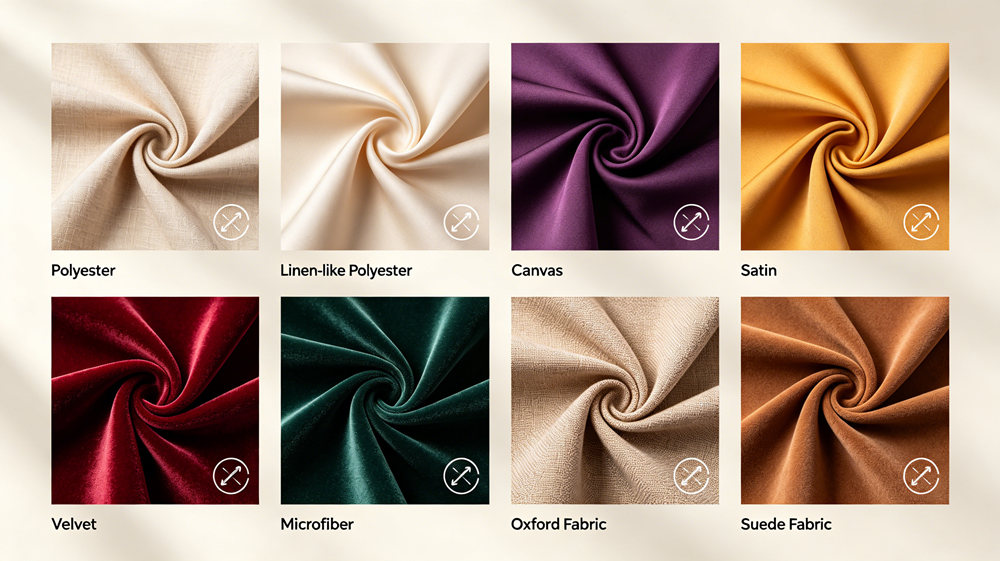
The best types of sublimation fabrics include 100% polyester, linen-like polyester, canvas, satin, velvet, microfiber, Oxford fabric, and suede fabric. These materials can withstand high heat and allow sublimation dyes to bond with the fibers, producing vibrant, durable, and high-resolution prints for apparel, home textiles, signage, and promotional products.
The success of sublimation printing depends on more than high-quality inks and advanced printing equipment. The fabric you choose directly affects color brightness, image sharpness, durability, and the overall appearance of the finished product. Even with the correct printer settings, using an unsuitable material can lead to faded colors, poor image transfer, or disappointing customer results.
As dye sublimation technology continues to expand across home textiles, apparel, promotional products, soft signage, and interior decoration, businesses have more fabric options than ever before. From lightweight polyester fabrics to linen-like textiles, velvet, canvas, satin, and microfiber, each material offers different characteristics and printing performance.
Another factor that deserves attention is high heat. During the sublimation process, temperatures typically range between 180°C and 210°C (356°F–410°F). Only fabrics that can withstand these temperatures while allowing sublimation dyes to bond with the fibers will produce permanent, vibrant images.
Whether you are a textile importer, printing company, OEM manufacturer, wholesaler, or brand owner, understanding the different types of sublimation fabrics can help you select materials that match your products, customers, and production requirements.
This guide explains how sublimation printing works, why polyester remains the preferred choice, the advantages of different sublimation fabrics, and how to choose the right material for specific applications.
100% polyester fabric is generally the best material for sublimation printing because it withstands high heat and allows sublimation dyes to permanently penetrate the fibers. Polyester fabrics produce vivid colors, sharp details, excellent wash durability, and long-lasting image quality. Polyester blends with a high polyester content can also deliver good results, while natural fibers such as cotton are not suitable for standard sublimation printing without special coatings.
Sublimation fabrics are textiles designed to work with dye sublimation technology. Most contain a high percentage of polyester fibers, allowing sublimation ink to transform from a solid into a gas under high heat and pressure. Instead of sitting on the fabric surface, the dye becomes part of the polyester fibers, creating permanent, full-color images that resist peeling, cracking, and fading.
Unlike traditional printing methods, sublimation printing does not leave a thick ink layer on the fabric. The printed surface remains soft, breathable, and comfortable while preserving fine image details and smooth color transitions.
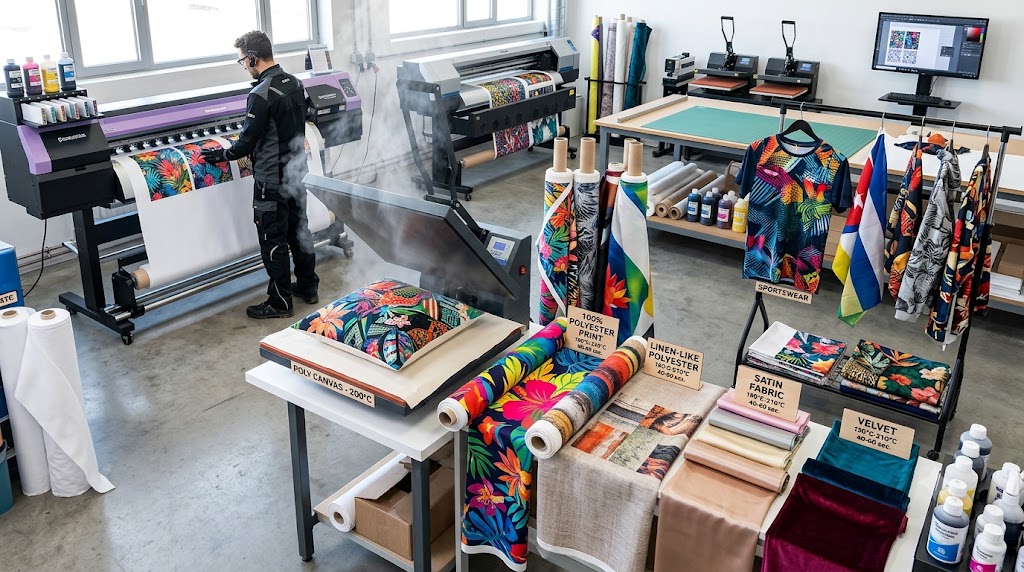
Sublimation printing is a digital printing process that transfers images onto polyester-based materials using high heat and pressure. Unlike screen printing or heat transfer vinyl, sublimation changes the physical state of specially formulated dyes, allowing them to penetrate polyester fibers instead of remaining on the fabric surface.
The process begins with a digital design printed onto sublimation transfer paper using sublimation inks. Once the printed paper is aligned with the fabric, both are placed inside a heat press. Under carefully controlled temperature, pressure, and pressing time, the solid dye particles convert directly into gas. This gas enters the open polyester fibers, and as the material cools, the dye becomes permanently trapped inside the fabric.
Because the color becomes part of the fibers themselves, the finished print feels smooth to the touch rather than raised or rubbery. The result is a highly detailed image with rich colors, excellent durability, and strong resistance to washing, cracking, or peeling.
One of the biggest advantages of sublimation printing is that the dye becomes part of the fabric instead of forming a surface coating.
This provides several benefits:
These characteristics make sublimation printing a preferred solution for home textiles, sportswear, promotional displays, curtains, cushions, tablecloths, flags, banners, and decorative fabrics.
Although sublimation printing is a reliable process, several factors affect the final result.
The polyester content has the greatest influence on image quality. Fabrics containing 95–100% polyester usually deliver brighter colors than blends with a lower polyester percentage.
Proper high heat allows sublimation dyes to convert into gas efficiently. Insufficient temperature may produce dull colors, while excessive heat may damage certain fabrics or alter their texture.
Even pressure across the transfer area helps produce consistent color distribution and sharp image edges.
Both under-pressing and over-pressing can affect print quality. Following the recommended time for each fabric type helps maintain consistent production results.
Smooth fabrics generally reproduce fine details more accurately than rough or heavily textured materials.
Heat is one of the defining elements of dye sublimation technology. Without sufficient temperature, sublimation ink cannot change into gas or bond effectively with polyester fibers.
Most sublimation printing applications use temperatures between 180°C and 210°C, depending on the fabric, transfer paper, ink, and equipment. This temperature range allows dye molecules to migrate into polyester fibers and produce permanent images with excellent color depth.
| Fabric Type | Recommended Temperature | Typical Press Time |
|---|---|---|
| Polyester Fabric | 190–200°C | 40–60 seconds |
| Satin Fabric | 185–195°C | 35–50 seconds |
| Canvas Fabric | 195–205°C | 45–60 seconds |
| Linen-Like Polyester | 190–200°C | 45–60 seconds |
| Microfiber | 185–195°C | 35–50 seconds |
Always test production settings before large-scale printing because different coatings, fabric finishes, and machine calibrations may require slight adjustments.
When exposed to high heat, sublimation dyes transition directly from a solid state into gas. At the same time, polyester fibers become more receptive to the dye molecules. As the fabric cools after pressing, the fibers return to their normal structure and permanently retain the transferred color.
This process creates images that become part of the textile rather than remaining on the surface.
Incorrect heat settings can affect both appearance and production efficiency.
Maintaining stable temperature and pressure throughout production helps improve consistency across every batch.
Polyester has become the standard material for sublimation printing because of its molecular structure and thermal stability.
Compared with many natural fibers, polyester offers:
These properties make polyester fabrics suitable for both consumer products and commercial textile applications, ranging from fashion apparel to soft signage and home décor.
At HSSublimation, fabric selection always begins with the intended application rather than price alone. Factors such as polyester content, fabric weight (GSM), weave structure, surface texture, and expected printing conditions should all be evaluated before production. Conducting a small transfer test on the selected fabric helps verify color performance, detail reproduction, and dimensional stability before moving to full-scale manufacturing.
By combining the right material with appropriate high heat settings, manufacturers can achieve consistent sublimation printing results while reducing waste and improving production efficiency.
The best fabric for sublimation printing is 100% polyester because it absorbs sublimation dyes under high heat, producing vibrant colors, sharp details, and long-lasting prints. Polyester fabrics also resist peeling, cracking, and fading after repeated washing.
Polyester fibers open when exposed to high heat, allowing sublimation dye to penetrate the material instead of remaining on the surface. This creates permanent prints with excellent color vibrancy and durability.
Standard cotton fabrics are not suitable for traditional sublimation printing because cotton fibers cannot bond with sublimation dyes. However, specially coated cotton products or sublimation transfer films may provide alternative printing options.
Most sublimation printing processes use temperatures between 180°C and 210°C (356°F–410°F). The ideal temperature depends on the fabric type, transfer paper, ink, and heat press settings.
Common sublimation fabrics include:
These materials contain polyester fibers that work well with sublimation dyes.
Yes. Fabric weight (GSM) influences durability, opacity, texture, and the final appearance of printed products. Lightweight fabrics are commonly used for apparel and flags, while heavier fabrics are preferred for upholstery, curtains, and home décor.